Inspection guidance
Visible timber damage: understanding the limits of a photograph
What a roof-void photograph can show, what remains concealed and why the next step depends on the extent of damage.
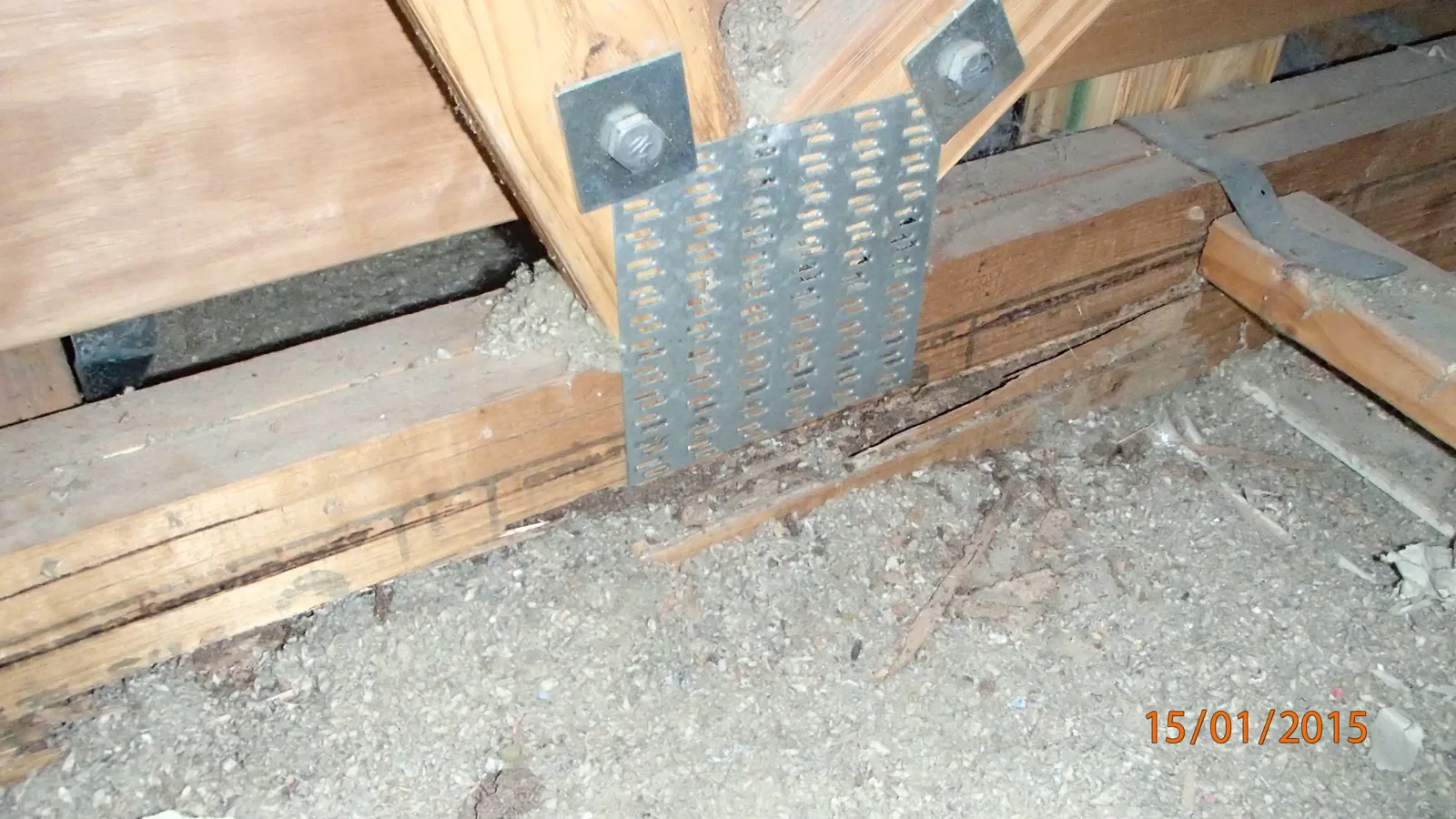
A photograph can record an important finding without establishing the full extent or cause of the damage. In this example from the Premise Inspections gallery, deterioration is visible along a lower timber member beside a metal connector plate. Surrounding material and the connection obscure parts of the timber.
What the visible evidence tells a buyer
The image shows a localised area that warrants attention. It does not, by itself, establish whether timber pests were active when the photograph was taken, whether concealed timber is affected, or how much sound timber remains. The photograph is an illustration of reporting limitations, rather than an assessment of the building’s structural performance.
From our inspection guidance: insulation can conceal damage
Roof insulation can conceal termite damage and building defects. Visible surfaces are only part of the picture: insulation may cover timber members or connections that cannot be assessed without moving it. This is why the report records access limitations and why an accessible roof void does not mean every roof timber has been inspected.
Keep potential termite entry points visible
Termites play the long game — do not make concealed entry easier. Keep sheds, tanks, gardens and foliage clear of external walls, termite inspection zones, management systems and weep holes. The required clearances depend on the building and the installed system; obtain advice from an appropriately qualified timber pest specialist where these are unclear.
As noted in our inspection guidance, joints between a driveway and the house slab, including near garage timber reveals, can provide concealed termite entry paths. An obscured joint is a reason for further assessment; it does not establish that termites are present. Keeping inspection zones visible helps ongoing inspection but does not guarantee protection.
Why roof-void access matters
Insulation, stored items, ducts, confined spaces and unsafe access can limit what an inspector can see. A visual inspection does not involve lifting insulation, removing linings or dismantling connections to expose concealed timber. The report should identify relevant access restrictions so the buyer understands which areas were not assessed.
How the finding should guide the next step
Where timber deterioration is observed, recommendations depend on its location, apparent extent and the accessible evidence. Further investigation by an appropriately qualified timber pest specialist or builder may be needed to clarify the cause and repair requirements. An engineer may be appropriate where a suitably qualified practitioner identifies a concern about load-bearing performance; a visual inspection photograph does not provide that engineering assessment.
Where the extent remains uncertain, Further Investigation Required and repair recommended may be the appropriate reporting category. A Major Defect classification requires sufficient inspection evidence; it should not be inferred from this photograph alone.
Questions to ask about the report
- Which timber members were visibly affected?
- Was evidence of current timber pest activity observed, or was only damage visible?
- Which areas were concealed or inaccessible?
- What further assessment or repair is recommended, and by whom?
Keep records of earlier timber pest inspections and any management system maintenance. These records can assist discussion but do not replace an inspection of the property’s current accessible condition.