Inspection guidance
Thermal imaging: useful screening with important limitations
A temperature difference can help direct observations, but it does not establish a concealed leak, termite activity or a defect-free building.
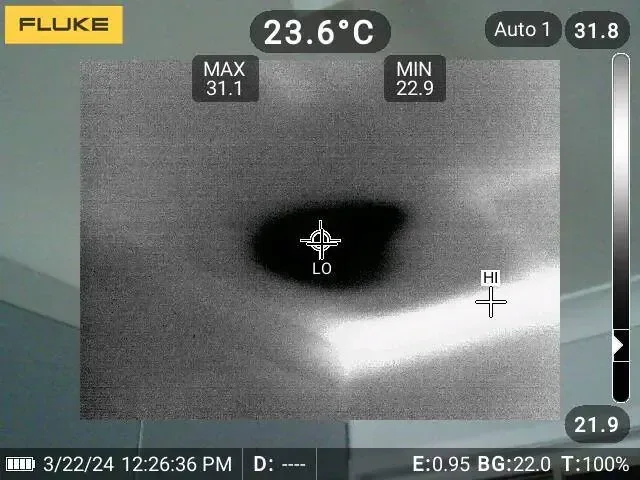
Thermal imaging can help an inspector identify an area that deserves closer attention. It records apparent surface temperature differences. It does not see through walls, ceilings or floors, and it does not directly identify termites or water concealed behind a finish.
What this example shows
The gallery image contains a darker central area against a different surrounding thermal pattern. That pattern is an observation to interpret alongside the accessible building surfaces and other relevant evidence. The displayed temperature scale does not, on its own, establish moisture, a failed waterproofing membrane or timber pest activity.
Why context changes the interpretation
Sun exposure, room use, air movement, insulation, surface materials and operating appliances can influence thermal patterns. Conditions at the time of inspection also affect what is apparent. A thermal variation may warrant further investigation, but its cause should not be assumed from colour or shading alone.
How other observations help
The inspector considers accessible visual evidence such as staining, deterioration or visible damage. Moisture screening may assist where appropriate and within the agreed scope. Readings and images need to be interpreted in context; neither establishes the condition of every concealed area.
If an unresolved moisture concern is identified, specialist assessment may be recommended. For example, an appropriately licensed plumber or waterproofing specialist may be relevant, depending on the observed evidence. A screening image is not certification of plumbing or waterproofing performance.
What an absence of a thermal variation means
A concealed problem may not produce a detectable surface temperature difference during the inspection. An absence of a notable pattern therefore cannot establish that the building is free of concealed moisture, timber pests or damage.
How to read thermal information in your report
Look for a plain-language explanation of the observation, relevant access limitations and the recommended next step. A thermal variation alone is not a defect classification. Where the cause cannot be determined and the surrounding evidence warrants assessment, Further Investigation Required is more appropriate than a definitive concealed-condition diagnosis.